Welcome to my blog. My name is Emiliano Ariel Videla Rodriguez. I am originally from Argentina but I am currently living in Edinburgh, Scotland.
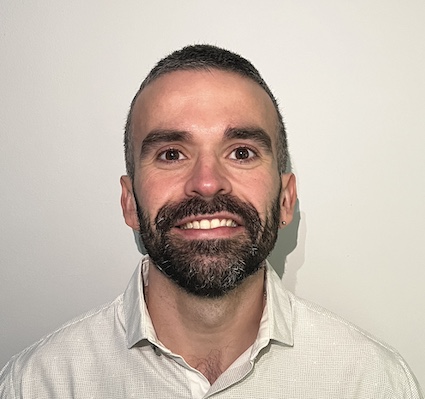
I did the equivalent of an integrated master program back in my home country, from 2011 to 2016. “Undergraduate” degrees in Argentina are called licenciaturas and they usually last for 5 years, finishing with a research project carried out during the last year. My degree was in biological sciences covering hard sciences such as mathematics, statistics, physics and chemistry during the first year and half, moving on to specific subjects such as cell biology, plant and animal morphology, physiology, and diversity, genetics, microbiology, and ecology and environmental sciences. During the fourth and fifth year, subjects are elective and I mostly focused on biotechnology and genetics.
Once I finished my degree, I went straight into a PhD program in biological sciences. The focus of my research was on poultry science, studying the effects of common environmental factors associated with poultry industry, such as chronic heat stress, dietary supplementation with a natural alternative to antibiotics, and immune challenges, and how these factors affect the interplay between the immune, endocrine, and nervuous systems. I used quail as my animal model for chickens, due to their size and their reproductive cycle, allowing me to work with a relative large number of birds and following them throughout different life stages: eggs, chicks, and adults. Although my main work was done at the facilities and in the lab, I started my journey in statistics and programming. The experiments I carried out were quite complex, and the knowledge I had at that time did not allow me to properly analyse my data. I started with a basic diploma in R and RStudio, were I familiarised myself with the programming language, learning how to import data, visualise them, and run some simply statistical models. Thereafter, I took additional courses in advanced statistics in R, learning ecological and evolutionary models as well as machine learning.
PhD programs in Argentina last for five year, and by my fourth year, I was done with all the experiments expected as well as the data analysis. I was looking for internships, secondments, or trainings in other countries. I started applying to different fellowships, without much luck. My supervisors at the time were aware of my interests and they suggested me applying to a European project working at the interplay of poultry science and poultry industry. There were 14 projects in total, with two projects catching my attention. These projects were data-driven with the opportunity to apply my current set of skills in statistical programming while acquiring additional ones. Long story short, I applied, I got called for an interview, and I got the position at a University in Scotland to work on Bayesian Networks. The position requiered to be enroll in another PhD program, so there I was starting my second PhD while finishing the first one.
Once I settled down in Scotland in late 2019, I started working on my second PhD while writing the thesis of my first one. The main topic of the new research project was on Bayesian networks, as an exploratory and graphical tool for decision making. I worked at the interplay of genetics and bioinformatics, with the additional component of the Bayesian networks. The project had two sides. On the one hand, I collected data from publicly available online data repositories, looking for experiments carried out in chickens and the effects of stress in gene expression. The overall idea was to provide a complemetary approach, by augmenting data and visualising interactions and interrelationships between genes and stress. On the other hand, I was working together with an academic and an industrial partner, where I was exploring their systems with Bayesian network approaches. While specialising myself in Bayesian networks, I also enrolled myself in courses to keep improving my programming skills. Some of the courses were provided by the university but I also took courses in other institutions.
Once I defended both of my theses, the first one in 2021, and the second one in 2022, I started my journey as a postdoctoral research fellow. Specialising myself in Bayesian networks allowed me to explore multiple research fields, such as a poultry management, consumers behaviours, antimicrobial resistance, and physical activity. The programming skills I have learnt provided me with a wealth of transferable knowledge, easily adjusting to each one of the research fields I have worked with. I could potentially describe myself as a consultant, where I provided expertise in data science and bayesian networks, while the research team contributed with the understanding of the outcomes.
After
Since this post doesn’t specify an explicit image, the first image in the post will be used in the listing page of posts.